
Reviewed: 1 September 2026
Legionella bacteria can grow in artificial water systems and cause
severe pneumonia known as Legionnaires’ disease. Exposure occurs mainly
by inhaling small droplets or aerosols of contaminated water. Risk
increases when systems contain stagnant water, favourable temperatures,
sediment, biofilm, corrosion or inadequate disinfection.
Systems requiring particular attention include hot- and cold-water
networks, showers, cooling towers, whirlpool spas, decorative fountains,
humidifiers and other installations that can generate aerosols.
A systematic control
programme
The employer or person responsible for the premises should ensure
that the risk is assessed and controlled by suitably trained and
competent people. An effective programme includes:
- appointing a responsible person with sufficient knowledge and
authority, - maintaining an inventory and, where necessary, a schematic of water
systems, - identifying stagnation, low-flow points and aerosol-generating
equipment, - avoiding dead legs and maintaining adequate water flow and
circulation, - keeping cold water below 20°C and hot water above 50°C where
technically practicable and in accordance with the applicable
guidance, - planned inspection, cleaning, descaling, maintenance and
disinfection, - checks after shutdowns, system changes or recommissioning,
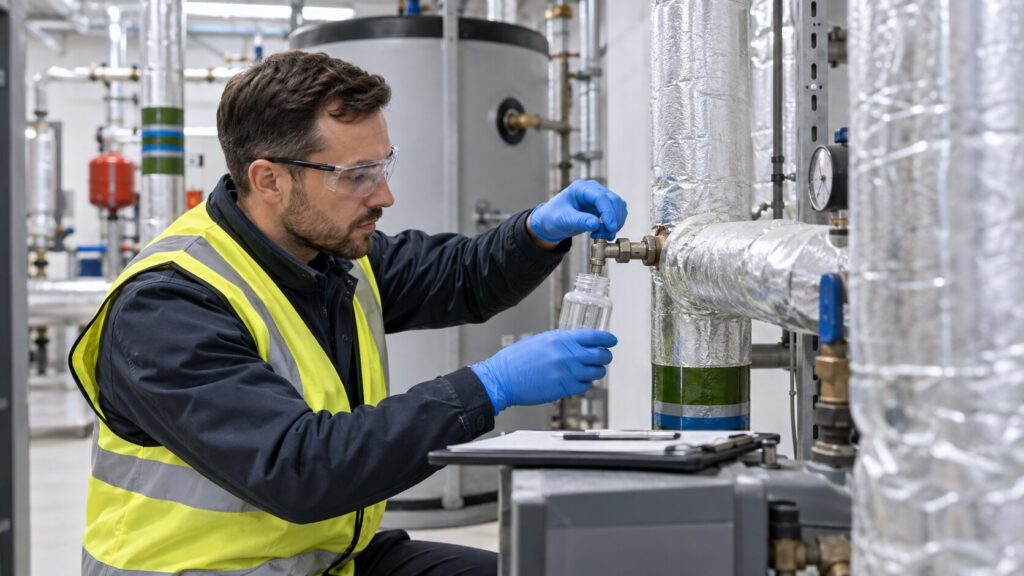
- records of temperatures, interventions, test results and corrective
actions, - sampling where required by the risk assessment, applicable guidance
or an incident.
Flushing taps and showers should not be an informal task carried out
by any member of staff. It should form part of a controlled procedure,
be carried out by informed people and minimise both aerosol generation
and the risk of scalding or exposure.
A risk assessment is not an acceptance of risk. If control limits are
not achieved, the system has been altered or inactive, or contamination
or a suspected case is identified, use of the affected system should
stop or be restricted and the situation should be reviewed immediately
by a competent person.
The precise technical settings, disinfection programme and need for
sampling depend on the type and use of the installation. They should be
determined by the risk assessment and the applicable national
guidance.
Official sources:
- Cyprus Department of Labour Inspection: Legionella
announcement, 21 August 2026 - ECDC: Legionnaires’
disease - ECDC: Measures
for reducing Legionella risk in tourist accommodation