
Reviewed: 1 September 2026
High temperatures, humidity, solar radiation, strenuous physical work
and unsuitable clothing or personal protective equipment can cause heat
stress. Possible outcomes include fatigue, dehydration, heat cramps,
heat exhaustion and heatstroke. Heat can also impair judgement and
concentration, increasing the risk of accidents.
In Cyprus, employers and self-employed persons must apply the
Occupational Safety and Health (Code of Practice for the Thermal Stress
of Workers) Orders of 2014 to 2023: P.I. 291/2014, P.I. 206/2020 and
P.I. 231/2023.
What the assessment should
consider
A heat-risk assessment should not rely on air temperature alone. It
should consider, among other factors:
- air temperature and relative humidity,
- direct solar radiation and air movement,
- the intensity, duration and pace of the work,
- clothing and personal protective equipment,
- workers’ level of acclimatisation,
- opportunities for rest and recovery between work periods,
- workers who may be particularly vulnerable, while respecting medical
confidentiality.
Workplace measurements and official weather information should be
used to adjust the work in good time. Monitoring a forecast does not
replace assessment of the actual conditions and demands of the specific
task.
Prevention and protection
measures
Controls must be defined before work starts and maintained throughout
the task. Depending on the level of risk, they may include:
- scheduling heavy work for cooler hours and limiting exposure,
- providing shade, ventilation, cooling and mechanical aids,
- suitable work and rest schedules, with recovery in a cool area,
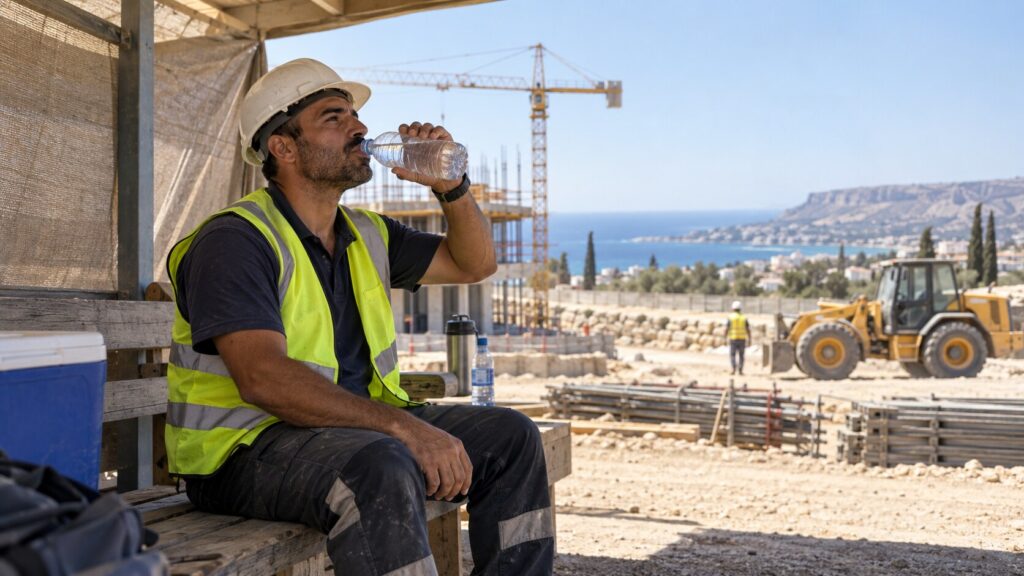
- ready access to cool drinking water and regular hydration,
- gradual acclimatisation for new or returning workers,
- training on early symptoms and a buddy-monitoring system,
- first-aid arrangements and immediate action when heat illness is
suspected.
A risk assessment is not an acceptance of residual risk. If the
required controls are unavailable or not applied, conditions
deteriorate, symptoms appear or a new hazard arises, work should stop
and the assessment should be reviewed before work resumes.
Official sources:
- Cyprus Department of Labour Inspection: Heat-stress
announcement, 17 August 2026 - EU-OSHA: Climate
change and occupational safety and health